
MBL vs HBL: A Clear and Practical Guide to Master Bill of Lading vs House Bill of Lading
In international shipping, documents are not paperwork — they are legal contracts. One wrong document choice can lead to shipment delays, customs issues, or unexpected costs.
This article explains the difference between MBL and HBL (Master Bill of Lading vs House Bill of Lading) in a clear, practical way for importers, exporters, and logistics decision-makers.
What Is a Bill of Lading?
A Bill of Lading (B/L) is one of the most important shipping documents in international trade. It serves as:
- A contract of carriage
- A receipt for the goods
- A document of title
In ocean freight, the two most common types are MBL and HBL.
What Is an MBL (Master Bill of Lading)?
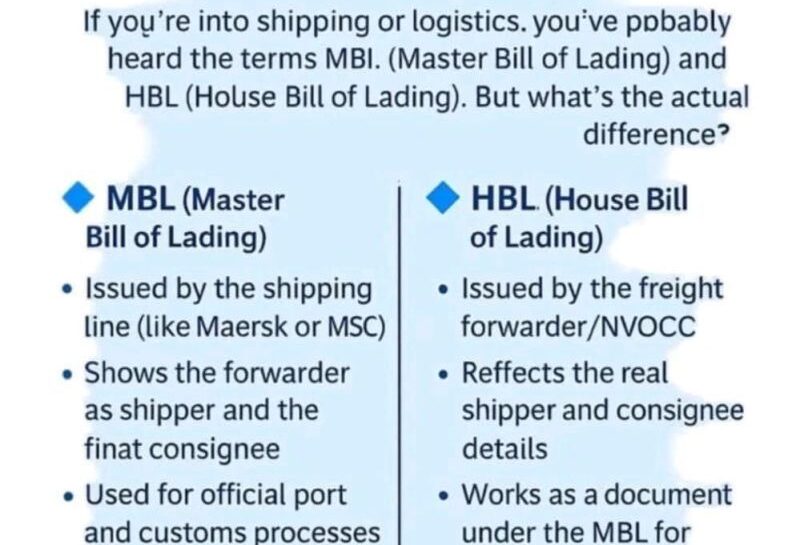
The Master Bill of Lading (MBL) is issued by the shipping line or ocean carrier.
Key points:
- Issued by: Shipping Line / Carrier
- Parties involved: Carrier ↔ Freight Forwarder (or Shipper)
- Used in: FCL and LCL shipments
- Fully accepted by customs, banks, and authorities
The MBL represents the main legal transport contract between the cargo and the carrier.
What Is an HBL (House Bill of Lading)?
The House Bill of Lading (HBL) is issued by the freight forwarder, not the carrier.
Key points:
- Issued by: Freight Forwarder
- Parties involved: Freight Forwarder ↔ Actual Shipper / Consignee
- Commonly used in: FCL and LCL consolidated shipments
- Manages the commercial relationship with the customer
The HBL reflects the agreement between the shipper and the freight forwarder.
MBL vs HBL – Key Differences
Issued by • MBL: Shipping Line • HBL: Freight Forwarder
Contract type • MBL: Legal transport contract • HBL: Commercial contract
Accepted for customs clearance • MBL: Yes • HBL: Yes (supported by MBL)
Common in LCL shipments • MBL: Yes • HBL: Yes
Cargo release control • MBL: Carrier • HBL: Freight Forwarder
Important Clarification
🚨 HBL does NOT replace MBL
- The MBL is the official transport contract with the carrier.
- The HBL is a secondary document issued by the freight forwarder.
Even when an HBL is used, the shipment always moves under an MBL in the background. Misunderstanding this point is one of the most common causes of shipment delays and disputes.
When Should You Use MBL or HBL?
Use MBL when:
- Booking directly with shipping lines
- Handling FCL shipments
- Working under Letter of Credit (L/C)
Use HBL when:
- Shipping LCL or consolidated cargo
- Working through a freight forwarder
- Managing multiple shippers under one container
In most LCL shipments, both documents exist together.
Why Understanding MBL vs HBL Matters
- Prevents customs delays
- Avoids cargo release disputes
- Clarifies responsibility and liability
- Improves negotiations with logistics partners
- Protects your supply chain from costly mistakes
Final Thoughts
Understanding the difference between MBL and HBL is essential in international shipping. Choosing the right document helps ensure smoother operations, faster clearance, and better control over your cargo.
At ARK, we help businesses structure shipments correctly from the start — documentation included.
If you’re planning an international shipment and unsure which document applies, message us📩
#MBLvsHBL #BillOfLading #InternationalShipping #FreightForwarding #ShippingDocuments #OceanFreight #ImportExport #SupplyChain #B2BLogistics